Author name: George Weld

The Long Run Belongs to Faith (Lent 2)

In the summer between my junior and senior years of college, I took a 2-week poetry workshop with Alfred Corn. I was not particularly fond of that class—Corn was a distant, formal man, serious about poetry and attentive to our poems but rather dour about the entire enterprise. In particular he didn’t compare well to the teacher we’d had the 2 weeks prior, the affable and sparklingly brilliant Robert Hass. Hass had ended our 2 weeks with him by walking around the room and giving every one of us a bear hug. 

Corn ended our 2 weeks by giving us a piece of advice—“If you are capable of doing anything else in the world, anything at all other than being a poet, I urge you: do that instead. Don’t do this.” It was a wry joke, and I think it was delivered affectionately, meant to inoculate us against the many disappointments and frustrations we would encounter if we chose that thankless path. But it stuck in my head like nothing else he said that summer.

I found plenty of things to do with myself other than writing poems; it turned out I was vaguely capable of several of them. I wasn’t a terrible teacher. I could design websites and code them. I could cook. At one point I thought I might make a go of it as a dog trainer. Since I could do other things, I thought, surely I should. But I kept yearning to write, kept wanting to throw everything else I had to the wind and take a crack at it. It would be unfair to say that Corn’s warning alone stopped me—my own laziness, my career anxiety, my fear of failure were more than enough to keep me from writing. But it worked in my mind like a fatal mantra, a constant reminder that to follow the path I wanted to follow would lead almost certainly to the abyss.

Years after that class—I was living in New York, working on the things I could do instead of writing—I spent some time reading through a Library of America edition of Flannery O’Connor. When I finished the stories, I got into her letters. One was to a young man from Georgia who’d asked her for advice—not about writing, but about faith. He was 19 years old, a first-year student at Emory University, confused about how to reconstruct himself after having had his childhood beliefs dismantled by professors in his philosophy and literature classes. How, he wanted to know, did an intelligent person reconcile faith with all that we knew and thought about the modern world?

“This experience you are having of losing faith, or as you think, of having lost it,” she wrote, “is an experience that in the long run belongs to faith; or at least it can belong to faith if faith is still valuable to you, and it must be or you would not have written me about this….I don’t know how the kind of faith required of a Christian living in the 20th century can be at all if it is not grounded on this experience that you are having right now of unbelief ”

The man she was writing to—in 1962—was Alfred Corn.  She continued: 

If you want your faith, you have to work for it. It is a gift, but for very few is it a gift given without any demand for equal time devoted to its cultivation….Even in the life of a Christian, faith rises and falls like the tides of an invisible sea. It’s there, even when he can’t see it or feel it, if he wants it to be there. You realize, I think, that it is more valuable, more mysterious, altogether more immense than anything you can learn or decide upon in college. Learn what you can, but cultivate Christian scepticism. It will keep you free—not free to do anything you please, but free to be formed by something larger than your own intellect or the intellects of those around you.

What a gift that letter was—and is. O’Connor was near the end of her life in 1962, her body wracked by lupus. She was famous, owed this kid nothing, presumably had plenty to do more important than to encourage a stranger in his doubt. And yet she did encourage him. She made the case for faith so well that I thought if someone had spoken like that to me when I was in college I would still believe.

The Long Run Belongs to Faith (Lent 2) Read More »

Lent 1: Introduction

Lent arrives with a familiar feeling of obligation, a feeling that tugs at me though I have no reason to acknowledge or honor it. If I have ever believed, it hasn’t been for a long time.

The word “Lent” is so simple, and I associate it so entirely with deprivation, abstinence, spiritual cleansing, that it hadn’t occurred to me until today to wonder where it came from. It’s a word that has come to seem almost onomatopoeic—an illusion generated perhaps by its rhyme with “repent,” or because it is such a gentle, fluttering, plaintive word, a tongue to the teeth, a wet leaf flicked by the wind. It seems a word designed for the use we give it now.

But “Lent” comes from an old English word for spring. It’s simply a designation of a season. Associating Lent with fasting, with Christ’s season in the wilderness, must grow out of an historical necessity. After the long winter, the storehouses are nearly empty but the ground is still too cold to replenish them. Spring—Lent—is a season of starvation, ironically butting up against the season of abundance and rebirth. Making a spiritual discipline of it is making a virtue of necessity.

New York is the first place I learned to understand how spring could be cruel. In the south, spring comes on fast and easy. Here it approaches and recedes, torturing the weather, tempting you to plant seeds, then crippling your sprouts with late frost. It’s also the first place I’ve lived where I saw regular people walking around on Ash Wednesday with ashy crosses on their foreheads. It came as a surprise to me, who’d grown up in the Christian south thinking of New York City as a wildlife preserve for pagans and atheists, to see this public demonstration of piety on the subway platforms. Perhaps the austerity of Lent is easier to embrace in a place like this, where spring isn’t a riot of flowers and sweet peas.

I’ve made symbolic (and secular) sacrifices for Lent in the past–I’ve given up meat, sugar, alcohol, sleep. This year I plan not to give something up but to meditate on something I lost long ago, think about a hunger I already feel.

Lent 1: Introduction Read More »

Death of the author

I dreamed I was reading a new book by a widely-admired writer, and the passage I read was truly beautiful, and it made me understand why everyone loved him. But I was also a little discouraged, a little envious knowing that something as beautiful as that could never spring from my head.

Death of the author Read More »

Ray Meeks

 I recently felt I may never make another book. When I tell my friends that, they say: “You’re crazy. You’ve got many more books in you.” But I’m not talking about my ability to make or edit a picture or create a sequence. I’m talking about the way grace works in the world. Things are given to you, and I don’t know if I’m going to be given something like that again.

read more here

From

Ray Meeks Read More »

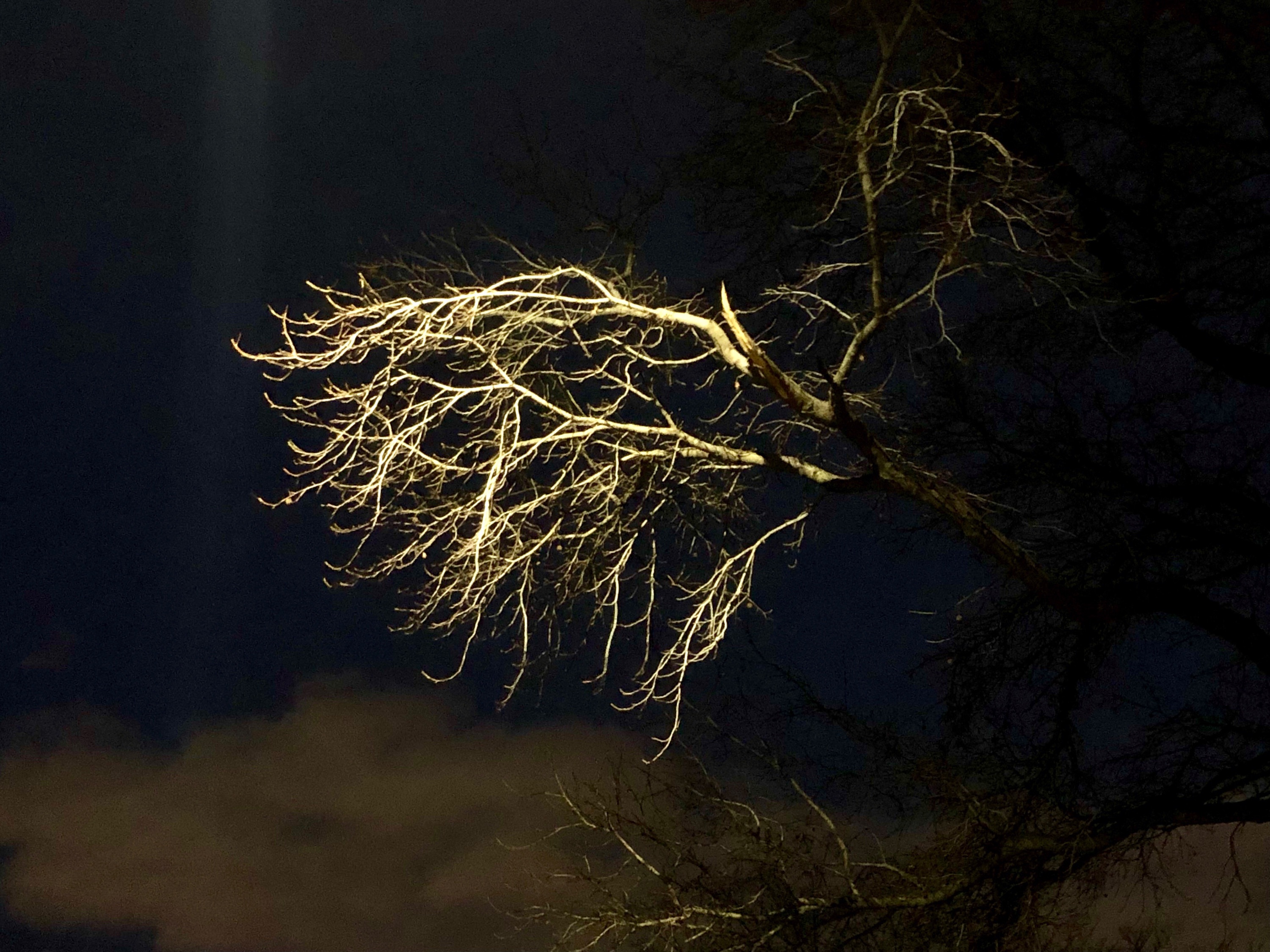
A wing, a web, the flutter of an old woman’s fingers, waving you off on a long slow run on the first day of the year.

Read More »

King of the World

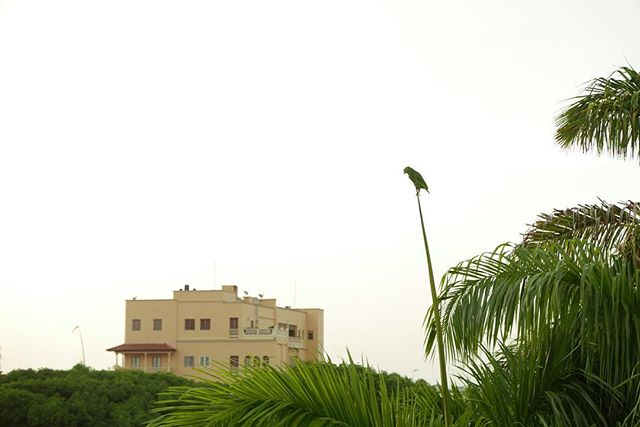
Exactly 20 years ago, in what I was sure was the best move of my life if not the coup of the century, I married @jet_racy. Today I feel just like this parrot outside our apartment in Cartagena, sitting on the highest branch in the plaza like he’s king of the world, saying “Ha-ha!! Ha-ha!!”
View on Instagram https://ift.tt/2y87NWR

King of the World Read More »

Fishing

My children saw something gleaming in the ditch and stopped to investigate. “Marbles!” The younger one bent down to look closer. “There are lots of them!” They were many colors but when they started picking them up it turned out they were not marbles but flat-backed fake “gems,” the kind you’d buy at a craft store or an aquarium supply.

And sure enough, among the gems were pebbles of safety glass, silicone caulk, black plastic stripping. Knowing our neighbors it was not hard to imagine the scene that had led to this: a child crossing an adult, an ultimatum that seemed, to the child, too wild to be real. A moment of testing, an eruption of rage, the fish tank’s bubbling filter dropping to the floor and wheezing like it was itself a beached fish as the adult carried the sloshing tank in his bare arms through the living room, through the door he kicked open in one blow, green scummy water splashing his shirt, reeking, fueling his anger, not stopping even to look for traffic, not that there ever was any, then the whole thing dropped to the road with a sodden crash, the man cursing and leaping back as the water splashed over his feet. The door slamming again, just audible over the bellowing of the man whose anger was inflamed and not assuaged by the punishment he’d devised and carried out, the weeping of the children and the pleading of the mother all swirling together to a crest of misery.

My children didn’t see any of the tank parts, they were so focused on the gems. They picked them out of mud and from under clots of leaves like it was Easter morning. “We can make decorations for your party” said the older one. “We can wash them off and glue them to boards. They’ll be so shiny.”

Fishing Read More »

Scroll to Top